





Last Updated: November 15, 2026
Quick Summary
A crate can help a dog with separation anxiety when it is introduced slowly and kept a positive place, because it gives the dog a defined safe space. Used badly, however, it becomes a trigger that adds panic to the original fear. The crate works best as one part of a step-by-step training plan.
- According to dvm360 (2026), 44% of pet owners report separation anxiety as a behavioral issue in their pets.
- Signs include barking or whining when the owner leaves, chewing at doors, pacing, and accidents in a housetrained dog.
- Build positive associations by feeding meals and dropping treats inside the crate before closing the door.
- Keep absences short during training and add only 30 seconds to a minute per session after calm sessions.
- Get professional help if the dog hurts itself, signs are severe, or progress stalls after several weeks.
Table of Contents
- What Separation Anxiety Looks Like in Dogs
- Why a Crate Can Help an Anxious Dog
- How to Crate Train a Dog With Separation Anxiety
- How Long Can a Dog Be Left Alone?
- Choosing the Best Dog Crate for Separation Anxiety
- Common Mistakes and When to Get Professional Help
- Choosing the Right Crate for Your Anxious Dog
- Frequently Asked Questions
Does a crate help a dog with separation anxiety, or make it worse? It depends on the dog and how the crate is introduced. Used well, a sturdy crate gives an anxious dog a defined safe space; used badly, it becomes a cage that adds panic to the original fear. Separation anxiety is a real behavioral condition, and according to dvm360 (2026), 44% of pet owners report it as a behavioral issue in their pets.
What Separation Anxiety Looks Like in Dogs
Separation anxiety is a panic response that happens when a dog is left alone or separated from the person it is bonded to.
Common signs include:
- Barking, howling, or whining that starts as soon as the owner leaves
- Chewing or scratching at doors, windows, and crates
- Pacing, drooling, or panting heavily
Not every dog who is bored has separation anxiety, but many dogs with the condition look bored from the outside. A clinical diagnosis should come from a veterinarian, especially if the signs are severe or getting worse.
Why a Crate Can Help an Anxious Dog
A crate can help because it limits the space a dog has to panic in. Many anxious dogs feel better in a small, enclosed area that feels like their own den.
A crate does not fix separation anxiety on its own; it works as part of a training plan. If the dog keeps destroying its crate, see seven steps to stop crate destruction for a concrete plan.
Here is what a good crate gives an anxious dog:
- A defined safe space that the dog can learn to view as its own
- Protection from injury when a dog would otherwise chew through doors or furniture
- Less destructive behavior while the owner is away
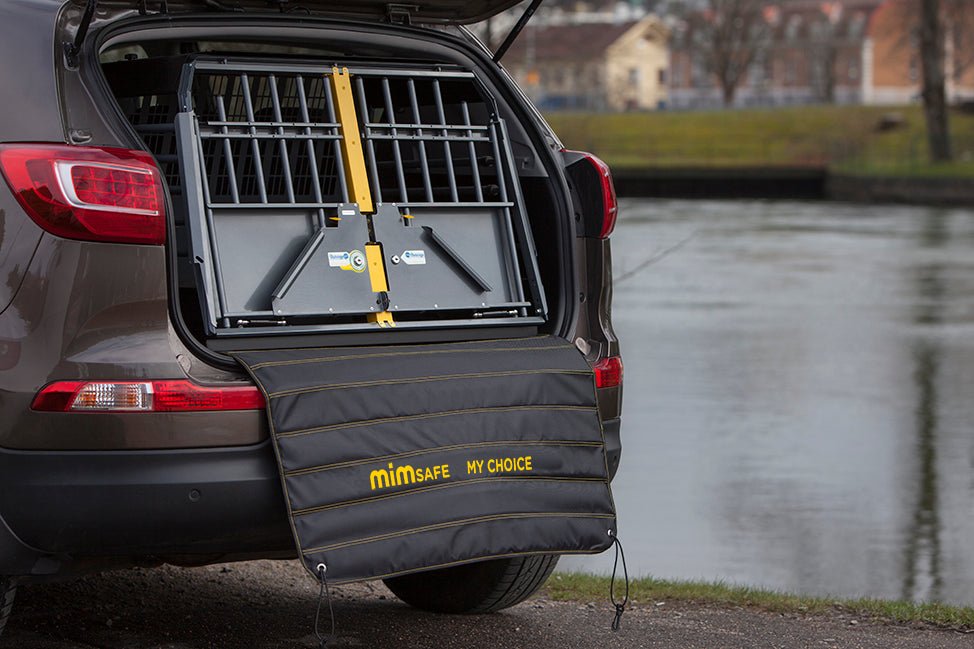
Choosing the right crate matters. A flimsy wire cage can bend or break under a determined dog. A sturdy, escape-resistant model that a dog cannot easily damage is a better choice than a flimsy one.
How to Crate Train a Dog With Separation Anxiety
Crate training an anxious dog takes longer than training a confident one. The goal is to build a positive association slowly, using systematic desensitization (exposing the dog to being alone at an intensity low enough that no panic occurs) and counterconditioning (pairing that trigger with something the dog loves so the emotional response flips from fear to anticipation). Rushing either one is the most common reason crate training fails.
Building Positive Associations Step by Step
Work through these stages at the dog's pace, moving on only when the dog is relaxed at the current one.
- Introduce the crate with the door open. Place it in a common room and let the dog explore without pressure. Feed meals nearby so the crate predicts good things.
- Toss treats inside. Drop treats near the back, then deeper inside, and let the dog go in and out freely. A food-stuffed puzzle toy or long-lasting chew does more work than a handful of kibble because it keeps the dog busy for minutes, not seconds.
- Feed meals near and then inside the crate. Start with the bowl near the entrance and move it further in over several days.
- Close the door briefly while the dog is eating. Open it before the dog finishes, repeat, and gradually increase the time. The door closing should always predict food, never the owner leaving.
- Practice short absences. Step out of the room for a few seconds and return before the dog gets upset. Use a door or baby gate so the dog can hear you but not see you, the first real test of the aloneness trigger.
- Build up the time slowly. Increase each absence only after the dog stays calm, adding 30 seconds to a minute per session, and end every session on a success rather than a panic.
Watch out: if the dog pants, drools, scratches at the door, or refuses food while crated, the step was too hard. Go back to the previous stage and shorten the absence, because a single panic episode can undo several calm repetitions.
Using Enrichment and Routine to Support Training
Crate training works better with a steady routine and mental work. Anxious dogs settle more easily when their day is predictable, and the crate becomes the place where the predictable good things happen.
- Keep feeding, walking, and crate times at the same hours each day
- Give a stuffed chew or puzzle toy only when the dog is in the crate, so the crate itself becomes the cue for a high-value reward
- Take a longer walk or play session before a planned absence to tire the dog out
Mapping Each Training Step to Products a Retailer Can Supply
Most separation-anxiety guides stop at theory. The practical version matches each stage of the protocol to a product category, so the owner has something concrete to buy and the retailer has something concrete to recommend.
- Steps 1-3 (introduction and free access): a food-stuffed puzzle toy, a long-lasting chew, and a washable crate pad. These lower the dog's arousal and build the crate-equals-good-things association.
- Steps 4-5 (door closed, short absences): a treat-dispensing toy that releases food slowly, plus a pheromone diffuser in the room. The toy extends the counterconditioning window past the moment the door closes.
- Step 6 and longer absences: a pet camera with two-way audio so the owner can confirm the dog is calm rather than guessing, and a calming wrap for dogs that respond to pressure. The camera is also the feedback loop, it tells the owner whether the last absence was a success or a setback.
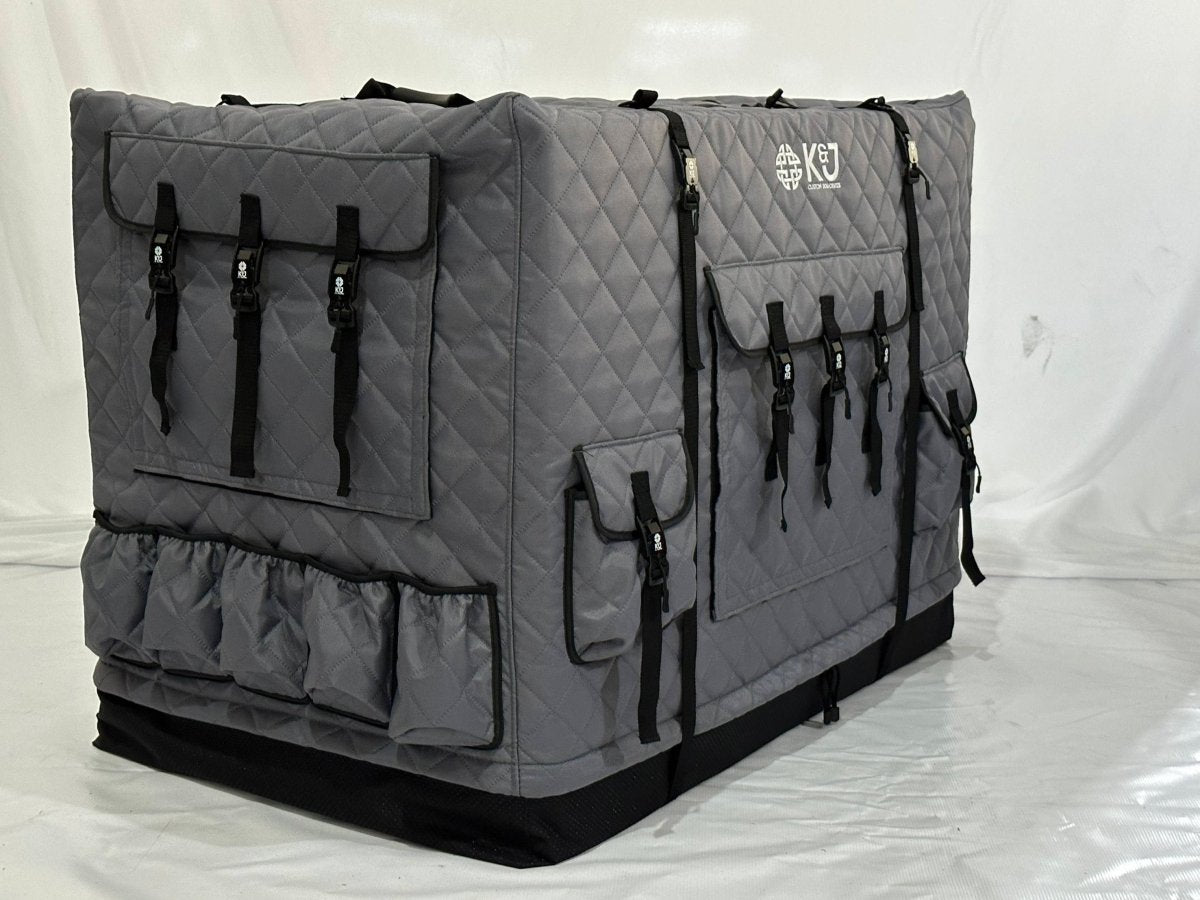
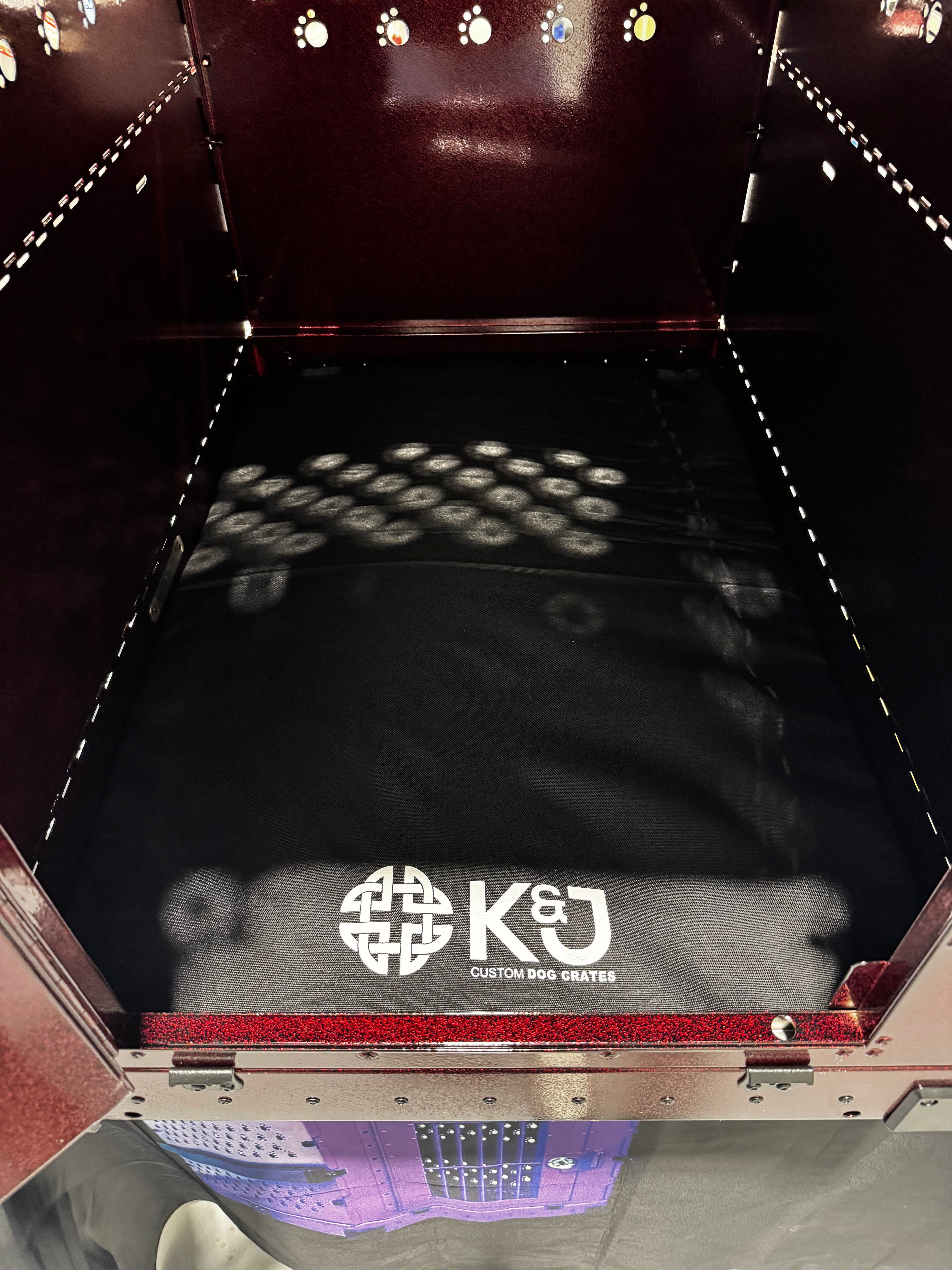
Our K&J Crate Pad is made with a highly durable, waterproof ballistic nylon cover and a Velcro closure. Unlike zippers, the closure keeps a chewing dog from getting into the foam core.
A Simple Progress Log
Desensitization only works if the owner tracks it. A one-page log with columns for date, absence length, whether the dog stayed calm, and what the dog did (ate, slept, paced, vocalized) turns guesswork into data. Owners who log sessions can see that a dog that panicked at 10 minutes last week now stays calm at 15, the evidence that keeps them from quitting too early.
The steps below summarise the crate training sequence, with the cue to move on at each stage.
| Step | What to do | Timing |
|---|---|---|
| 1. Introduce crate | Leave door open in a common room; feed meals nearby | Until calm |
| 2. Toss treats | Drop treats near the back, then deeper inside | Free access |
| 3. Feed inside | Move the food bowl further in over several days | Over several days |
| 4. Close door briefly | Close while eating; open before the dog finishes | Increase gradually |
| 5. Short absences | Step out for seconds, using a door or gate | A few seconds at first |
| 6. Build up time | Add 30 seconds to a minute per session | Only after calm sessions |
How Long Can a Dog Be Left Alone?
Most adult dogs should not be left alone for long stretches, and dogs with separation anxiety need even shorter absences during training. No single safe number fits every dog; age, health, bladder control, and anxiety level all matter.
During training, keep absences short and build them up gradually. A dog that panics after five minutes should not be left for an hour.
Choosing the Best Dog Crate for Separation Anxiety
A crate for an anxious dog needs to do three things well: contain the dog, withstand chewing and pushing, and feel secure. Not every crate meets all three.
Our two main options serve different needs:
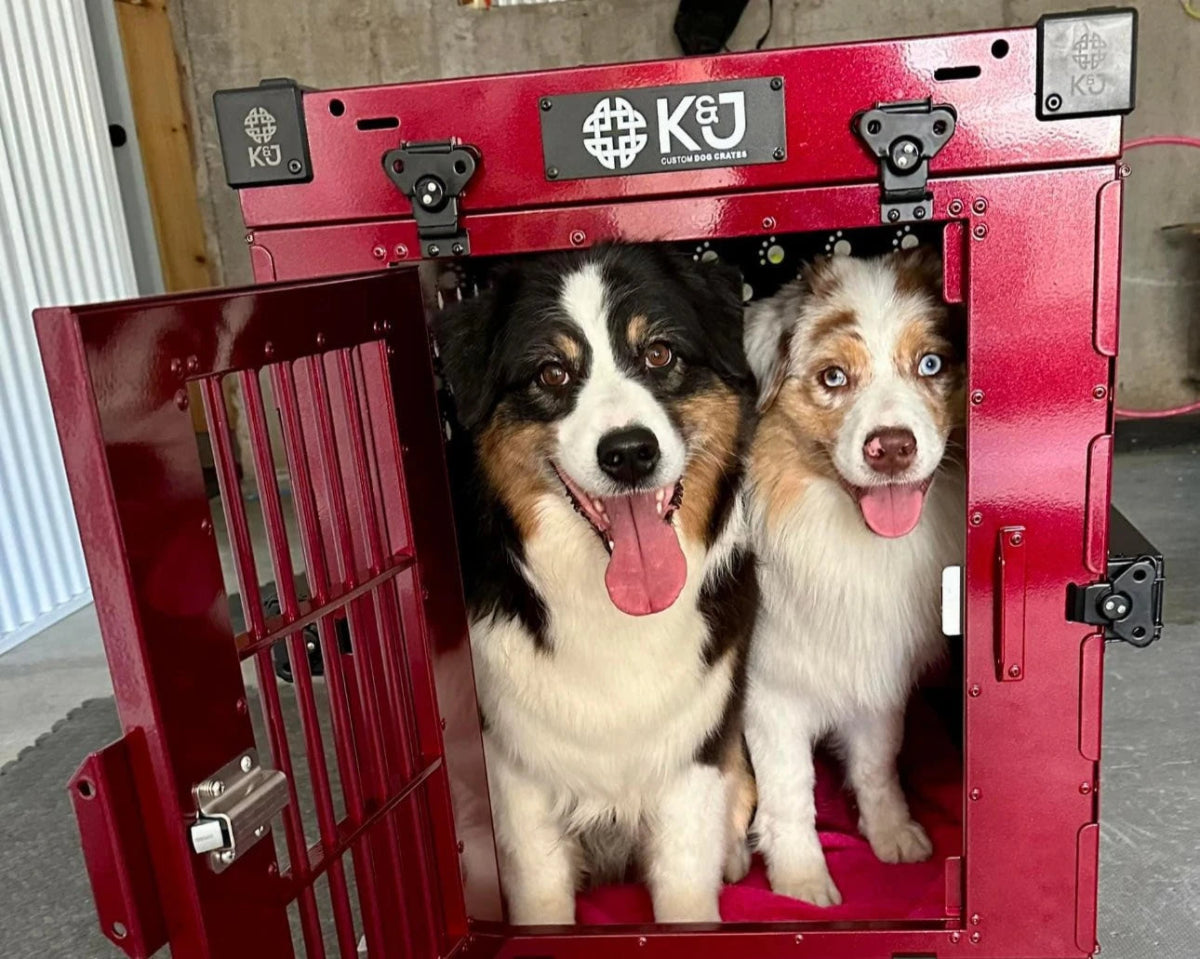
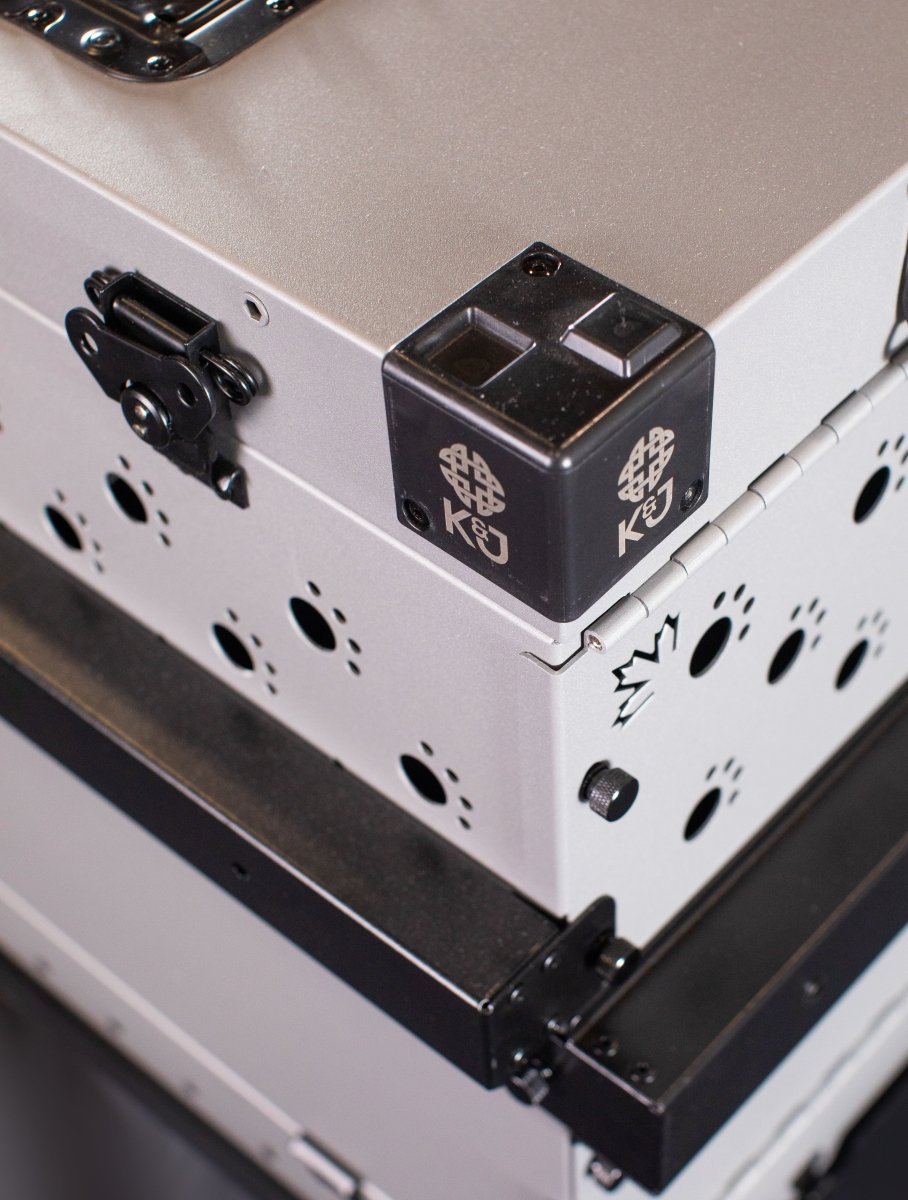
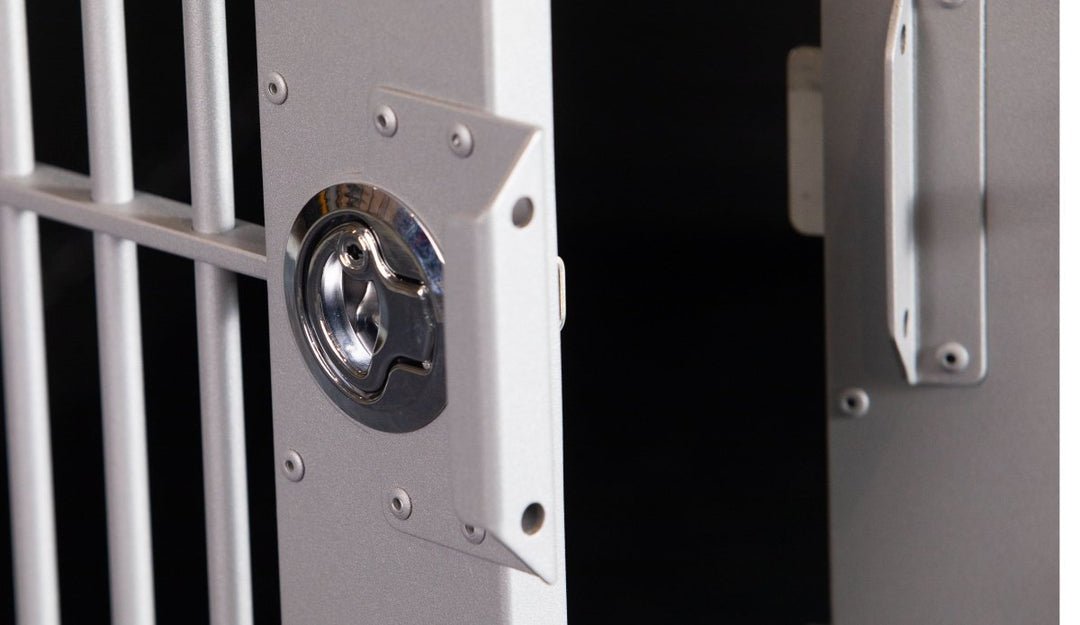
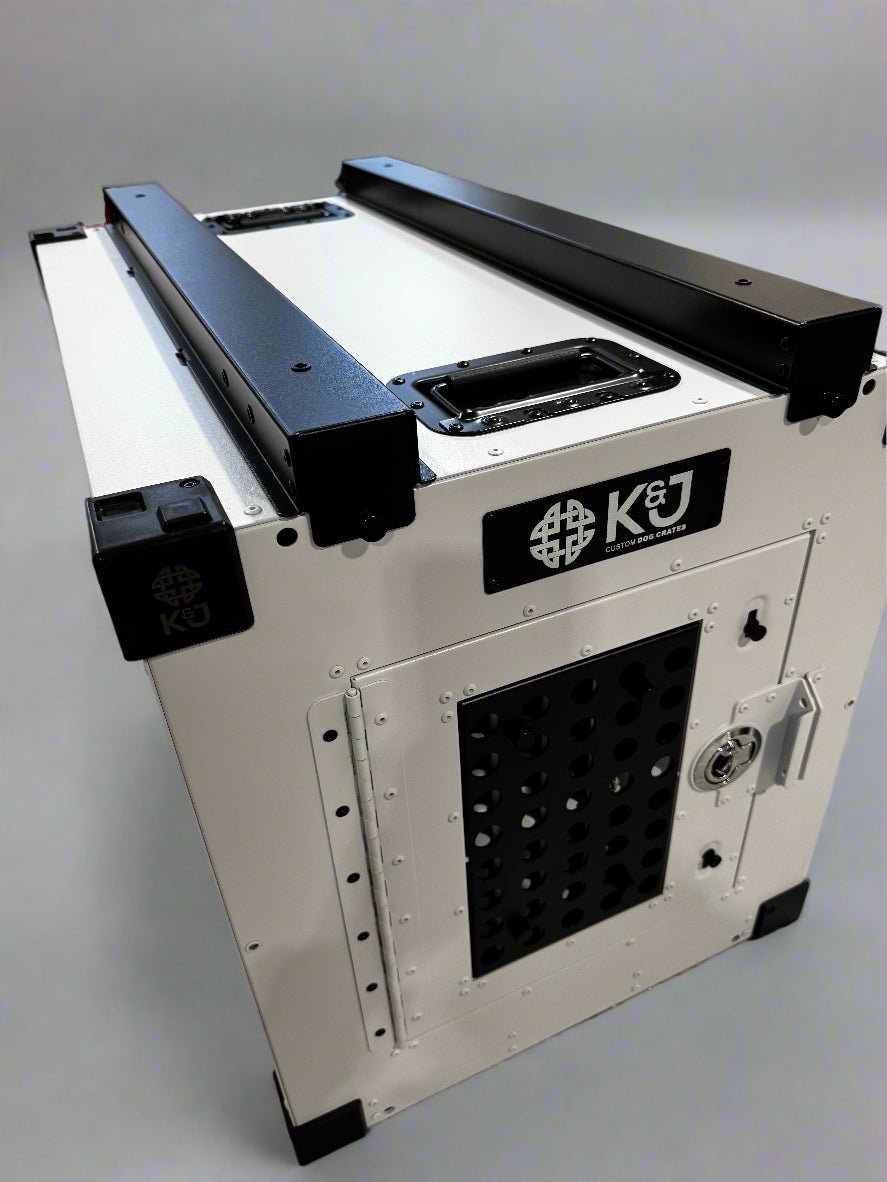
- Stationary Metallic Crates suit a permanent spot in the home. They use high-grade aluminum, stainless steel slam latches, and door deadbolts. They are finished in custom powder-coated metallic colors and come in a range of sizes.
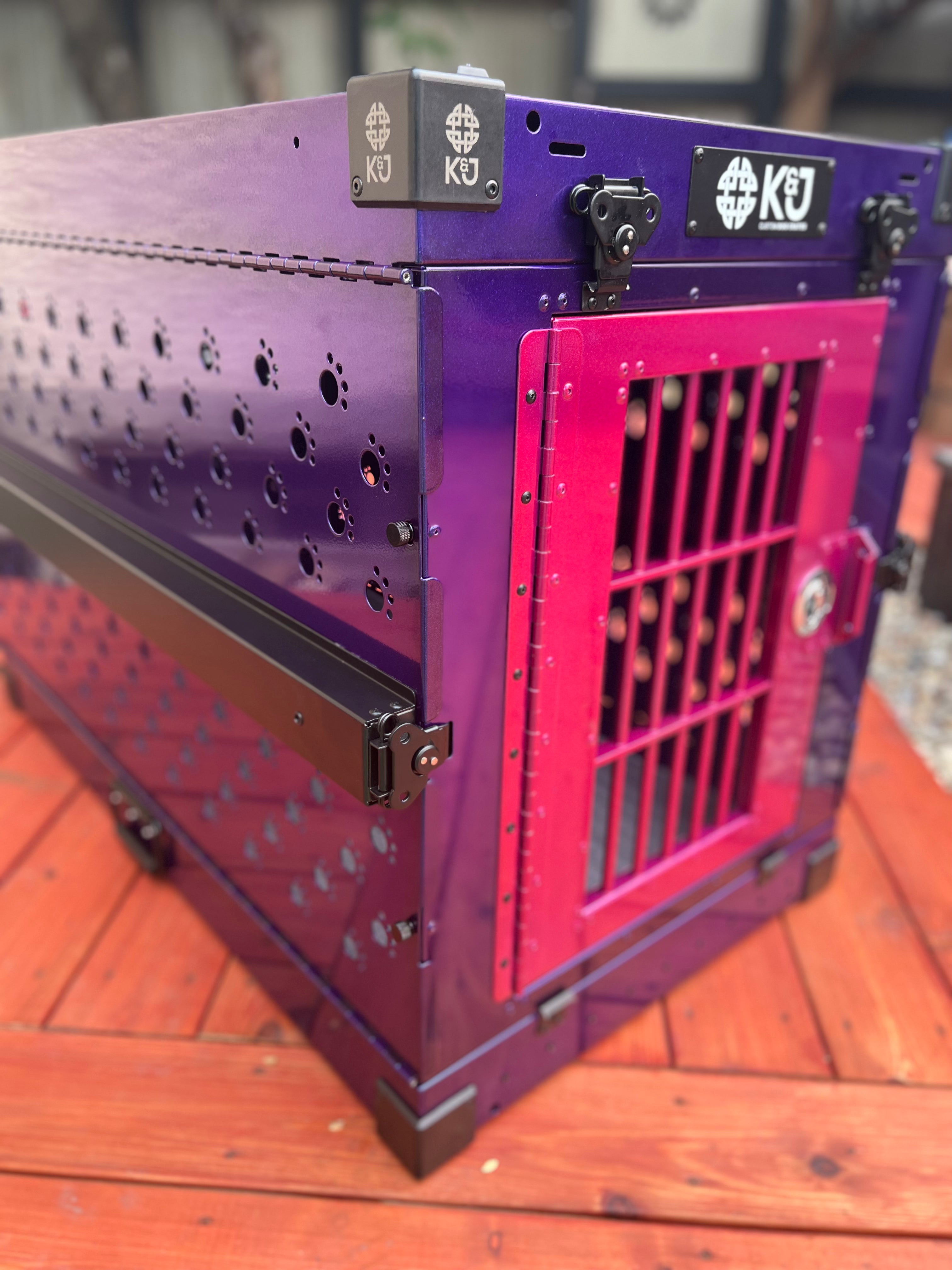
- Metallic Collapsible Crates fold down for storage and travel. They include integrated door deadbolts with three locking points and solid bottom side panels.
The right choice depends on where the crate will live: a stationary crate suits a dog that stays home most of the day, while a collapsible crate makes sense if you move the crate around or travel with your dog. Explore the collapsible metallic crate range to find a model that folds down when you need it to.
Size matters too. The dog should be able to stand, turn around, and lie down comfortably. A crate that is too large can let a dog use one corner as a bathroom, which works against house training.
Common Mistakes and When to Get Professional Help
Several mistakes undermine crate training for anxious dogs, and most share a root cause: the owner moves faster than the dog can cope.
- Rushing the process. Closing the door before the dog is calm sets back progress. Each panic episode teaches the dog that the crate predicts fear, the opposite of what counterconditioning is supposed to do.
- Using the crate as punishment. A dog that learns the crate means trouble will resist it. The crate should only ever predict food, rest, and calm.
- Leaving a dog in the crate too long. Extended confinement increases stress and can cause physical problems. During training, absences should stay short enough that the dog succeeds.
When to Escalate
Get professional help if the dog hurts itself, if signs are severe, or if progress stalls after several weeks. A veterinarian can rule out medical causes, pain, thyroid problems, and cognitive changes can all mimic anxiety, and discuss options.
Medication is not a failure of training. For severe cases, a veterinarian may prescribe anti-anxiety medication alongside the behavioral plan. The medication lowers arousal enough for training to take hold; it does not replace the training.
Products That Prevent the Most Common Mistakes
- Escape-resistant crate construction prevents the injury-and-escape mistake. Solid latches, deadbolts, and panels are worth looking for in any escape-resistant crate.
- Chew-proof crate pads prevent the shredded-bedding hazard that turns comfort into an emergency vet visit.
- Pet cameras with two-way audio prevent the guesswork mistake, the owner can see whether the dog is calm or panicked instead of assuming.
Choosing the Right Crate for Your Anxious Dog
A crate can help an anxious dog, but only as part of a patient, step-by-step plan. Start slowly, keep the crate a positive place, and choose a model strong enough to keep your dog safe. Our team at K&J Custom Dog Crates builds heavy-duty aluminum crates for home, travel, and professional use, and we are glad to help you find the right fit for your dog's size and temperament. Browse our Stationary Metallic Crates and Metallic Collapsible Crates, and add a K&J Crate Pad for comfort.
Frequently Asked Questions
Can a dog crate help with separation anxiety?
A crate can help a dog with separation anxiety when it is introduced gradually and paired with positive experiences. It gives the dog a defined safe space that feels predictable, which can reduce panic when the owner leaves. A crate does not cure separation anxiety on its own, though. It works best alongside desensitization, counterconditioning and enough daily exercise and enrichment. Dogs that injure themselves trying to escape should be assessed by a veterinarian before crate training continues.
How do you crate-train a dog with separation anxiety?
Start by placing the crate in a common area and leaving the door open, with treats and a favourite chew inside. Once the dog enters willingly, close the door for a few seconds while you stay nearby, then slowly increase the time and distance. Keep departures and returns low-key so they do not trigger excitement or panic. If the dog shows distress at any stage, return to the previous step. Progress is usually measured in weeks rather than days.
How long can a dog with separation anxiety be left alone?
There is no fixed limit that suits every dog, but most adult dogs should not be left alone for more than four to six hours at a time. Dogs with separation anxiety often need shorter absences while training is in progress. Build up alone time in small increments, such as five minutes, then fifteen, then thirty, and only move on when the dog stays calm. If you work long hours, consider a dog walker or daycare to break up the day.
What are signs that a dog has separation anxiety?
Common signs include whining, barking or howling when left alone, pacing, destructive chewing near doors or windows, house soiling despite being trained, and attempts to escape from a crate or room. Some dogs drool heavily or refuse food while the owner is away. Signs often begin within minutes of the owner leaving. A veterinarian or veterinary behaviorist can confirm whether the behaviour is separation-related and rule out medical causes.


